{Olfaction} is the function that allows a direct connection to the
brain thereby creating a sense of smell. There are sensory cells in the
mucous membrane of the nasal cavity and the membrane is stimulated when
chemical particles are dissolved in the mucous.
The olfactory nerve in the brain ends with the olfactory bulb. The olfactory
bulb is located high in the roof of the nose (between the eyes) and
just above a small bone in the skull that has tiny holes. When the smell
receptors are stimulated in the nasal mucosa they enter the tiny holes
where they enter the olfactory bulb in the brain. The signals are then
carried to a part of the brain called the limbic system (the
rhinencephalon) where the smells are then analyzed.
What you
perceive as an odour, is really the chemical particles that were
stimulated. The brain can analyze over 10,000 different fragrances. Our
sense of taste can only register 4 types of taste. Therefore, without
our sense of smell, food would taste fairly bland. So when you have a
cold and your sense of smell is blocked, so is your sense of taste.
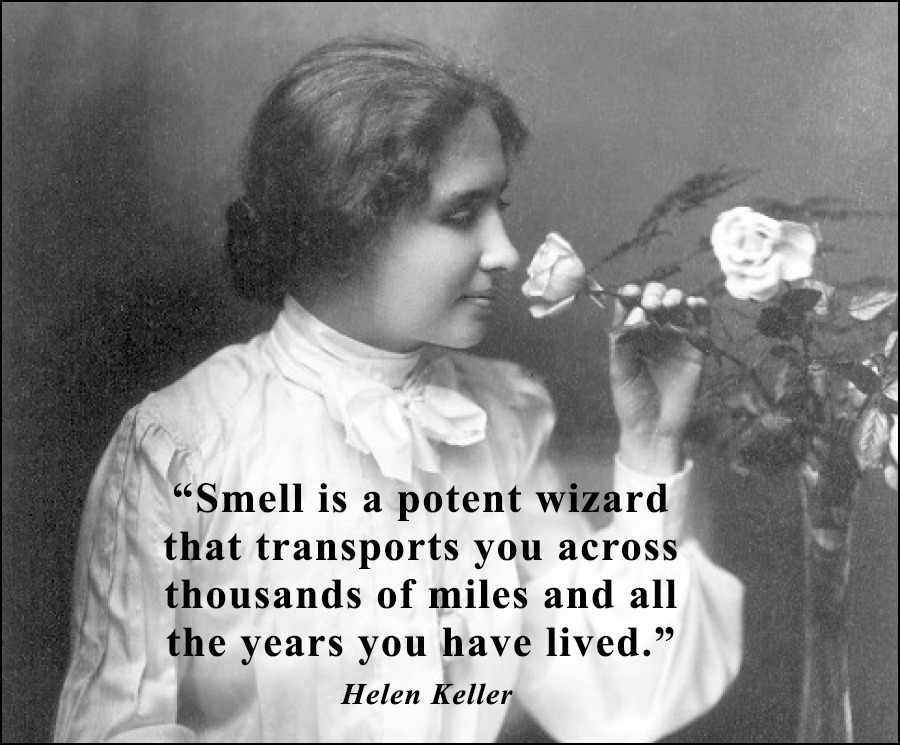
{Smell and Memory}
A smell can bring on a flood of memories, influence people’s moods and
even affect their work performance. Because the olfactory bulb is part
of the brain’s limbic system, an area so closely associated with memory
and feeling it’s sometimes called the “emotional brain,” smell can call
up memories and powerful responses almost instantaneously. Think about
the memories you have for when you smell something that reminds you of
your childhood. For example the smell of chlorine you might associate
with summers at the pool or lilies with a funeral. When you first smell a
new scent, you link it to an event, a person, a thing or even a moment.
Can you think of a smell that may trigger your memory and own emotional
response?
Aromatherapy works in the same way. For example you
may have a relaxing aromatherapy massage treatment using a certain
essential oil like lavender and then each time you smell that oil your
memory will be taken back to the time you were relaxed and you will feel
the same way each time you smell that oil. Your smell calls up that
memory and evokes that emotional response.
Smell has a powerful
influence on the nervous system. Fragrance can influence mood, evoke
emotions, counteract stress or even reduce high blood pressure.
————————–